
9 September 2026 — Alastair McDowell
Australia Publishes the GEMS Exposure Draft for Heat Pump Water Heaters
The Australian Government has published the exposure draft of the Greenhouse and Energy Minimum Standards (Heat Pump Water Heaters) Determination 2026. Consultation opened on 7 September and closes at 11:59pm on Monday 5 October 2026.
The consultation hub carries the determination, an Explanatory Statement and a Guidance Document, and the department is running an online forum during the consultation period.
This is the instrument that turns the MEPS decision into law. It follows the Decision Regulation Impact Statement and the April 2026 technical options paper, and sets one performance hurdle, three product classes, and a testing obligation that changed significantly since April. We covered the test method in AS/NZS 5125.1 Appendix H and what MEPS testing involves, so this article deals with the determination.
What is the minimum COP level required?
A coefficient of performance of at least 2.0 at the average test condition.
Section 15 fixes how it is measured: to Appendix H of AS/NZS 5125.1:2014 Amd 1:2026, using an operating mode and control settings an end user in Australia or New Zealand could use.
The guidance confirms 2.0 equals 60% energy savings in Zone 3, the level the Decision RIS landed on and the floor STC eligibility already sets. It holds the current floor in place as STCs phase out toward 2030 rather than raising it.
Appendix H defines three climatic test conditions: 1°C (cold), 9°C (average) and 19°C (hot). Only the average carries a MEPS obligation in Stage 1.
Which products are covered?
Section 8 sets three covered classes:
- Integral system. The condenser is part of the tank or mounted inside it, and heat reaches the water by free convection.
- Stand-alone heat pump only component. A heat pump with no tank. It must include a condenser, so a partial unit does not qualify.
- Stand-alone system. A stand-alone heat pump plus a single tank, grouped as one model by a single model identifier. Without that identifier the tank is a separate GEMS product and may fall under the Electric Water Heaters Determination 2012.
Section 9 excludes products already covered by the Electric Water Heaters Determination 2012, heat pumps for non-drinking water only (hydronic, pool, spa), combined potable and non-potable products where the potable function cannot be tested alone, tanks of 700 L or greater, and heating capacity of 7 kW or greater at the average condition with the element excluded.
The 700 L threshold reflects households of 10 to 14 people at 45 to 50 L of 60°C water per person per day. The 7 kW threshold came from New Zealand survey data and the Victorian Energy Upgrades register, which show nearly all residential products at 5 kW or below.
Where a system uses several tanks, two 90 L instead of one 180 L, the size test applies per tank. There is also no residential versus commercial distinction: the GEMS Act regulates at point of supply, so some products sold commercially are in scope on size alone.
What is the expected timeline?
Section 2 commences the determination 12 months after registration. Section 13 ends limited grandfathering 6 months later, giving roughly 18 months from the day the instrument is made.
No registration date is fixed. Registration in early 2027 would mean commencement around early 2028 and grandfathering closing later that year. That is our estimate, not a published date.
The guidance calls 12 months a compromise: industry asked for longer on laboratory capacity grounds, and the department kept 12 months and dropped mandatory cold and hot testing instead.
Stage 2, covering labelling and noise, is flagged for around 2028 and will revoke and remake this determination.
Do cold and hot conditions have to be tested?
No. Only the average 9°C condition carries a MEPS obligation. Cold (1°C) and hot (19°C) testing is voluntary in Stage 1, and an untested condition is published as “not rated”.
That makes it a marketing decision too, since a model rated at all three sits on the register beside models marked “not rated”. Model the result before volunteering. Our indicative modelling of a current, fully compliant stand-alone range put cold COP well below average COP, with only a small minority clearing 2.0 at 1°C. A cold rating below 2.0 breaches nothing in Stage 1, but it is still published.
Is there a separate test condition for products installed indoors?
No. The draft carries no separate condition for products installed indoors, in a garage or in a plant room. The 9°C average condition applies regardless of intended installation.
What changed since the April technical paper?
The calculation method for stand-alone systems has been withdrawn. Every stand-alone system must now be individually tested.
The April technical options paper carried Attachment A, which let a manufacturer test a stand-alone heat pump once with its smallest tank, then compute all four indicators for larger tanks from the two AS/NZS 4692.1 standing heat loss reports and both measured storage volumes.
The guidance removes it and gives the reason:
The Exposure Draft proposes that all stand-alone heat pump water heater systems must be individually tested to determine COP and other product parameters. This has changed since the Technical Paper, which had proposed a method for calculating a conservative COP for this product class, wherein the registrant would test to the smallest tank supplied in the system. However, in response to stakeholder feedback that the calculated method was confusing and would not support the provision of the most accurate information to consumers on the energy performance of HPWHs, the department has decided to now require all products in this product class to be tested.
The department puts the impact at fewer than 10 additional products across the market.
Why did the calculation method matter?
Because of two flat factors written into it, not the physics.
The COP expression was 0.9 times the tested COP, divided by a heat-loss term that could only make the answer worse: it floored the difference in standing heat loss at zero. A 10% reduction applied even where both tanks had identical standing heat loss. Declaring 2.0 on the larger tank needed a tested 2.222 on the smaller one, and more once the heat-loss term contributed anything.
The method also directed that the tested load size not be increased for a larger tank. COP rises with load size and section 15(3) keys the allowed size to deliverable volume, so a larger tank earns an allowance Attachment A did not let you claim.
We modelled both routes across a real stand-alone range on our own Appendix H engine. The calculation method returned 76 to 97% of the tested COP, averaging 87% at the average condition, with all four indicators uniformly conservative. The heat-loss term moved the answer by at most about 5%. The fixed load size rule was worth up to 31%.
So the margin, not the arithmetic, moved the result: a product capable of 2.2 could have been recorded at 1.98 and failed. Those figures are modelled predictions, not laboratory results, though the 0.9 factor is exact.
What are the registration options for a stand-alone heat pump sold with several tanks?
Three, and they price very differently in laboratory time.
Register the heat pump alone as a section 8(1)(b) component. Section 15(2) then tests it with a single tank at the minimum volumetric capacity the manufacturer recommends, whose equivalent a customer can reasonably obtain in Australia or New Zealand. One test per heat pump, and the whole range’s declared performance is the small-tank result.
Register each heat pump and tank combination as a section 8(1)(c) system, with its own model identifier and its own test. Section 11 then exempts the heat pump from separate registration, but only where it is actually supplied as part of a registered system, not merely offered that way.
Do both and both registrations are needed, since the GEMS Act requires registration under each class a product falls into unless an exemption applies.
The minimum recommended tank size in the installation manual therefore becomes a regulated performance input: a smaller minimum means less deliverable volume, a lower allowed load size and a lower declared COP, while a larger one gives up the small-tank end of the market.
What load size can the test use?
Section 15(3) caps the declared load size against maximum hot water volume (V50, from equation H.7.2 of Appendix H):
| Maximum hot water volume | Declared load sizes allowed |
|---|---|
| less than 100 L | 1 |
| 100 to less than 150 L | 1, 2 |
| 150 to less than 200 L | 1, 2, 3 |
| 200 to less than 250 L | 1, 2, 3, 4 |
| 250 to less than 300 L | 1, 2, 3, 4, 5 |
| 300 to less than 350 L | 1, 2, 3, 4, 5, 6 |
| 350 to less than 400 L | 1, 2, 3, 4, 5, 6, 7 |
| 400 to less than 450 L | 1, 2, 3, 4, 5, 6, 7, 8 |
| 450 L or greater | 1 to 9 |
The cap stops a product being rated at an unrealistically large load, since COP rises with load size. The guidance works an example: a 270 L tank reaching about 330 L at the average condition may be tested at any size from 1 to 6.
The allowed range can differ between conditions, because maximum hot water volume moves with ambient temperature. Within one condition, section 7 requires the same declared load size, operating mode and control settings for every indicator, for both MEPS and labelling. The department rejected keying the cap to tank volume, since maximum hot water volume reflects what the product actually delivers.
This is where Appendix H’s 50°C delivery threshold does its work. A lower outlet set point, a tempering arrangement or a control sensor lower in the tank all reduce maximum hot water volume, which can drop the cap a whole step and a tenth of a COP point with it.
What has to be declared, and can the values be derated?
Section 16 requires four performance indicators at every climatic test condition, given to the customer at point of supply: COP, full reheat time, heating capacity and maximum hot water volume. Untested conditions are reported as “not rated”.
Declared values may be derated from tested values, which buys a buffer against check testing:
| Declared value | Form | Constraint |
|---|---|---|
| COP | 1 decimal place | 2.0 or greater for the average condition, and no better than tested |
| Full reheat time | whole minutes | no shorter than tested |
| Heating capacity | kW, 1 decimal place | no better than tested |
| Maximum hot water volume | whole litres | no better than tested |
Declared values are subject to GEMS check testing like any other determination, so the derating allowance is worth using. A declared COP set at the tested value leaves no margin, and it still has to be 2.0 or better.
The declared COP must come from the same test that demonstrated compliance, and the other values from a test using the same operating mode and control settings. Section 20 requires the GEMS registration number to be clearly visible when supplying or offering a product, which the guidance extends to online advertising.
Registrants will also be asked for a diagram locating the condenser and refrigerant lines, so a laboratory does not drill into them, and the cylinder component volumes, so temperature sensors can be placed correctly.
Can models be grouped into a family?
Yes, up to 10 models, and the tank equivalence test is demanding.
Every model must share the product class, the components and configuration affecting energy performance, the operating modes and control logic, the same energy performance at each condition, and an equivalent tank. Section 15(4) defines equivalent tightly: same temperature sensor positions, same water inlet and outlet positions, same internal height to diameter ratio, same standing heat loss, same volumetric capacity.
Element size is deliberately absent. Where the element does not operate during any test, its rating can vary within a family; where it does operate, a larger element changes reheat time, heating capacity and the element to heat pump split, so ratings must match.
Compliance risk is collective. Any model may be selected for check testing, and if one fails, all models in the family may be treated as non-compliant.
Two tanks from the same range rarely satisfy all five criteria. Across the eight tanks we modelled, no pair matched on all five. The closest agreed on volumetric capacity to within 1.5% and standing heat loss to within 0.13%, with simulated COPs differing by under 1%, but failed on heat pump return port position. Read literally, “the same” carries no measurement tolerance, and two separately manufactured tanks never have identical measured volume or standing heat loss.
Can different control settings be used for MEPS and for the incentive schemes?
No. One set has to serve both.
Section 15(1)(b) requires settings an end user could actually use, and section 18 requires the tested mode and settings to be given to the customer where a model has more than one. A configuration no customer would run is not available.
Settings optimised for AS/NZS 4234 at a 45°C minimum delivery temperature will be tested against Appendix H’s 50°C floor, and what is declared to CER, VEU and ESS has to match what is tested for MEPS. Any control change after a scheme submission means resubmission, so the declaration, the 4234 modelling and the Appendix H test stay aligned.
Do existing products need to be retested?
The test is when the individual unit was manufactured or imported, not when the model was first sold.
Stock manufactured in or imported into Australia before commencement, including stock in transit, is grandfathered and can be supplied without retesting or re-registration provided it is otherwise compliant. Stock manufactured or imported after commencement must be registered under the new determination before supply.
Whether grandfathered stock sells until exhausted or only until a fixed date is a matter for the determination, and this draft sets a date: section 13 ends limited grandfathering 6 months after commencement, so pre-commencement stock cannot be supplied after that even if unsold. A model that stays in production therefore needs an Appendix H test and a GEMS registration, with no exemption for a long-standing design.
The incentive scheme side is unsettled. Whether existing CER registrations need resubmission, and whether the AS/NZS 4234 minimum delivery temperature moves from 45°C to 50°C to match Appendix H, has not been announced. We expect alignment eventually, with a modest reduction in STC counts, but nothing is published and it should not be planned around yet.
Does this vary by state?
No. MEPS is a federal requirement under the GEMS Act and applies uniformly across every Australian state and territory.
The state-by-state variation sits in the incentive schemes: STCs are federal, VEECs Victorian, ESCs New South Wales. MEPS is the floor a product must clear to be supplied at all, and the schemes are the incentives on top.
Does this apply in New Zealand?
Not directly. This is an Australian instrument under the GEMS Act 2012 and it regulates supply in Australia. New Zealand participates in the joint programme through E3 and the Trans-Tasman Mutual Recognition Arrangement, and both the test standard and the section 15(1)(b) settings test are written to cover both countries, but the obligation here is Australian.
For a New Zealand supplier, the test method and four declared indicators are still the ones a trans-Tasman range will be built around. With no STC equivalent setting a floor, COP is already the metric New Zealand manufacturers and customers watch most, ahead of reheat time or deliverable volume.
How much laboratory time does an Appendix H test take?
More than one 24 hour cycle per condition, and potentially six.
Appendix H at one condition is a heat-up from cold fill, a part draw-off, a reheat, a maximum draw-off, a reheat after it, then a re-precondition and a 24 hour tapping cycle for each load size the H.6.3.5 search touches. The search runs up and down, so every rejected size costs another precondition and another 24 hours.
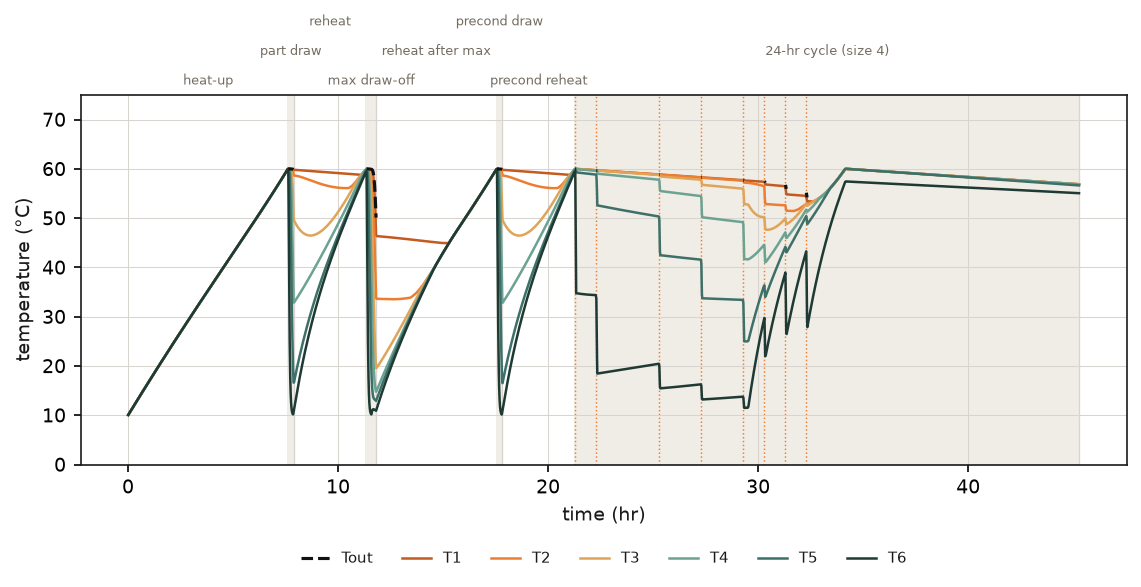
Table 15 sits in the determination, not in Appendix H. A laboratory working from the standard alone will search past the section 15(3) cap and bill for the cycles, and the registrant cannot use a result above it. Knowing the cap before booking can turn six cycles into one: across the 16 systems and three conditions we modelled, the difference was 288 cycles against 48.
What should manufacturers do before 5 October?
Read the draft against your own range. Check scope first (700 L tanks and 7 kW at 9°C are out), then the registration route for any stand-alone heat pump sold with more than one tank, then whether the settings intended for Appendix H match what is declared to CER, VEU and ESS.
Then make a submission if any of it affects you. Four drafting points are worth raising:
- Section 15(4)‘s “the same” carries no measurement tolerance. A performance-based alternative, where the registrant shows the tanks produce the same declared values, would catch genuinely equivalent tanks.
- No provision tells a laboratory to stop the load-size search at the section 15(3) cap.
- The estimate of fewer than 10 additional products is checkable against the public registers, and a single stand-alone range can exceed it. Ask what the unit of count was.
- The guidance cites section 10 for the heat pump only registration exemption. It is section 11; section 10 is families of models.
Submissions go through the consultation hub and close at 11:59pm on Monday 5 October 2026.
How EnergyAE can help
We simulate the Appendix H sequence on our own engine, so a manufacturer can see the likely result before booking a laboratory. Our MEPS simulation service shows what the assessment covers, with a worked sample report:
- Prediction across a tank range: COP, maximum hot water volume, reheat time and heating capacity per pairing, showing which combinations clear 2.0 and which are a check-testing risk.
- Registration route comparison, pricing the section 8(1)(b) minimum-tank route against per-system section 8(1)(c) registrations.
- Load size screening against Table 15, so the laboratory tests one size instead of searching to nine.
- Family grouping under section 15(4), so one test covers as many models as the rules allow.
- Control settings review across Appendix H, CER, VEU and ESS.
- Submission support before 5 October.
These are modelled predictions from a product’s own parameters. They do not replace an accredited laboratory test and cannot be used for registration.
Get in touch if you would like us to run the numbers on your range.